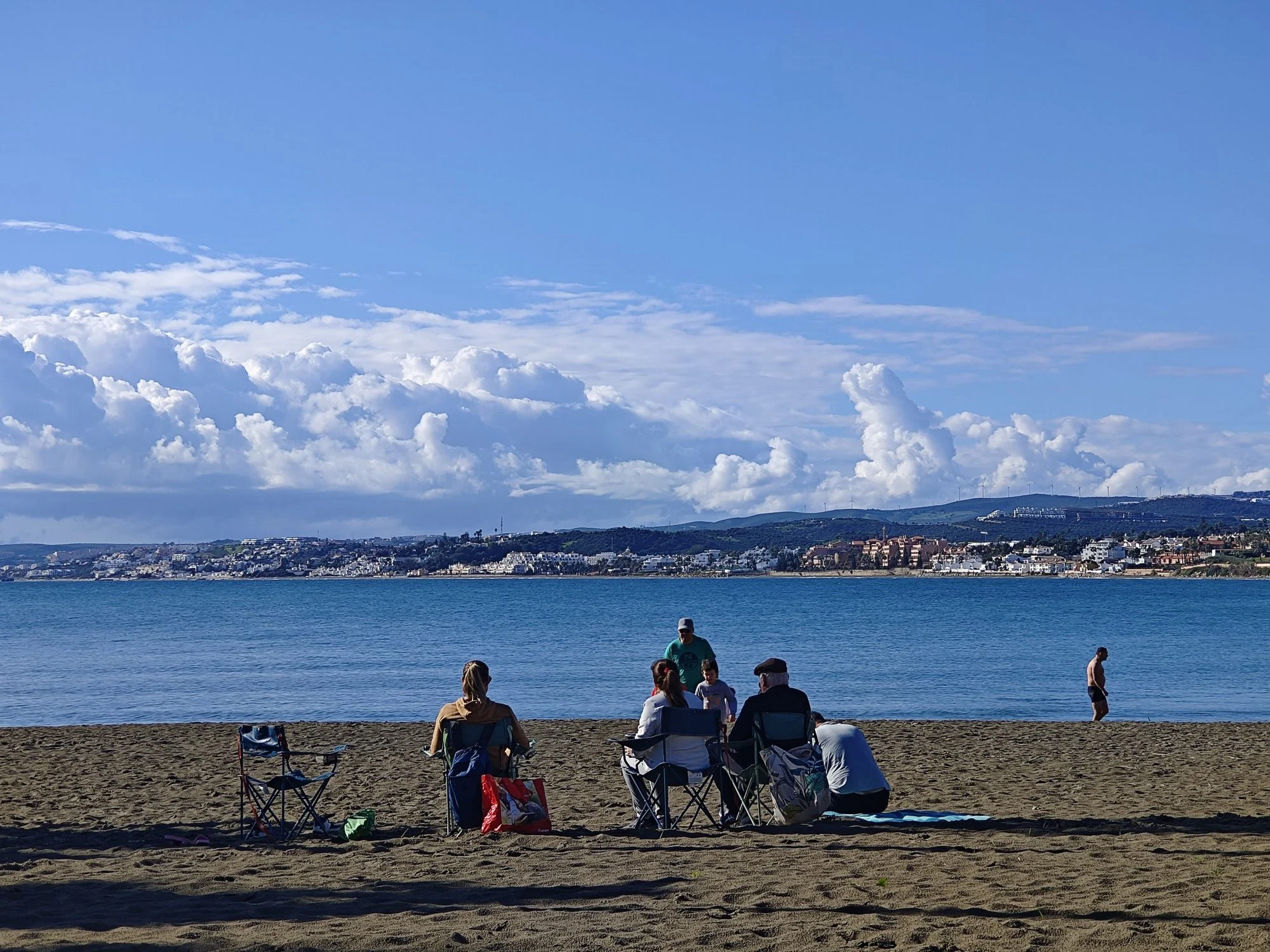
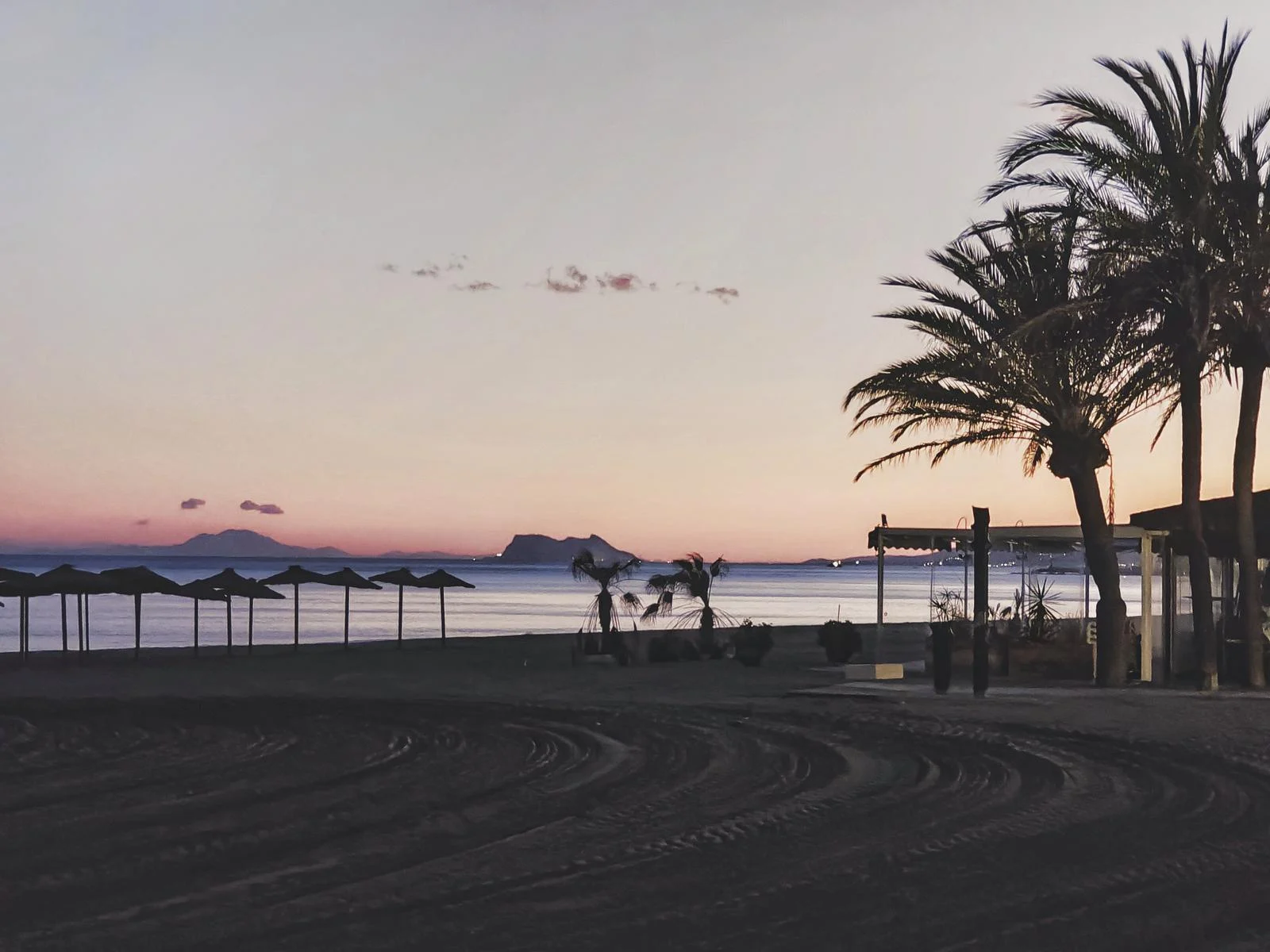
If you fancy swapping the coast for the mountains for a day, Ronda is just over an hour’s drive from Estepona. The drive itself is part of the fun: from San Pedro de Alcántara the road winds up through the Serranía de Ronda, with the views getting wider at every bend. At the top waits one of the most striking towns in Andalusia.

A town on the edge of a gorge
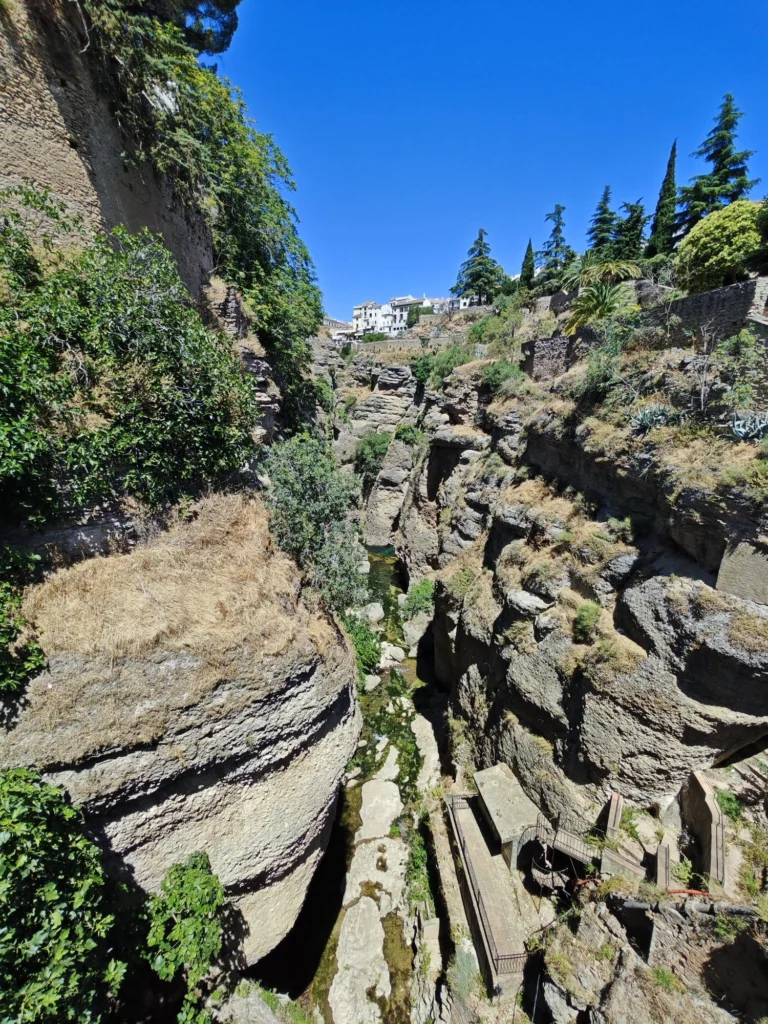
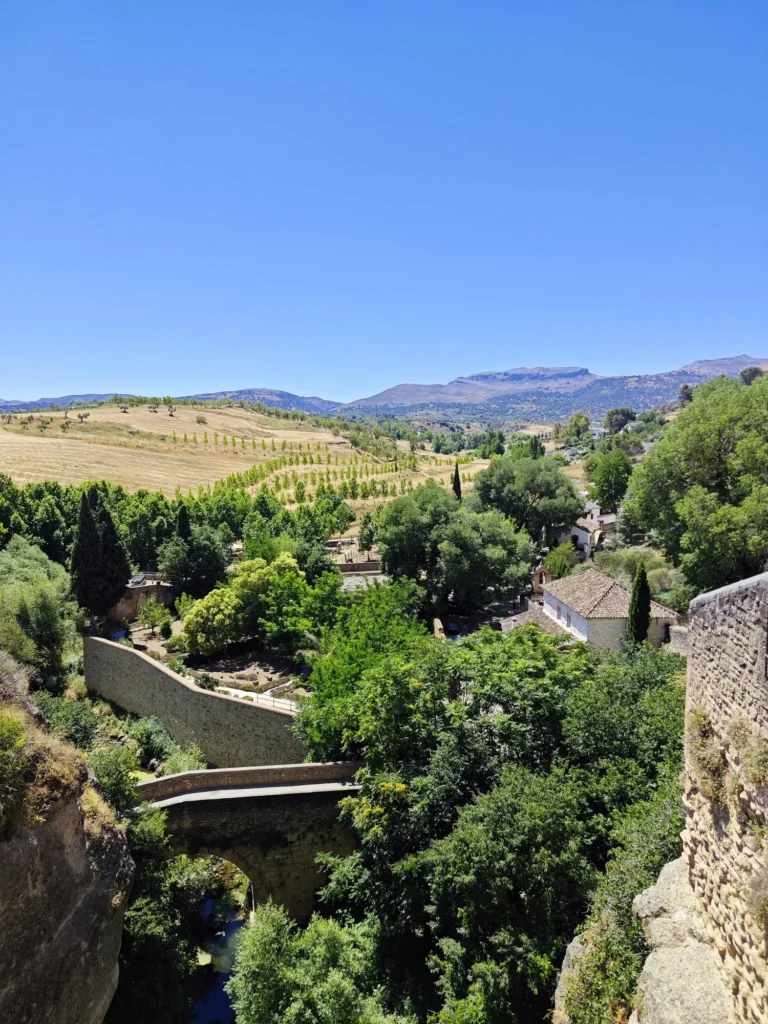
Ronda sits on a rocky plateau that the Guadalevín river has split in two. The gorge, El Tajo, is almost a hundred metres deep, and the white houses stand right on the edge. That view is what makes Ronda unique: the town on one side, and on the other a steep drop to a green valley of fields and olive trees with mountains in the distance.
The Puente Nuevo
Ronda’s most famous sight is the Puente Nuevo, the “new bridge” that links the old and the new town. It was built between 1759 and 1793 and is 98 metres high. The room above the central arch was once a prison; today it holds a small exhibition about how the bridge was built. For the best photo, take the path down from Plaza de María Auxiliadora. Allow about twenty minutes down and a little more to come back up, as it is steep.

The old town: La Ciudad
Across the bridge lies La Ciudad, the oldest part of Ronda, with narrow streets from Moorish times. Here you will find the Baños Árabes, 13th-century Arab baths that are among the best preserved in Spain. In the gardens of the Casa del Rey Moro a staircase cut into the rock leads all the way down to the river. Down in the valley are two older bridges, the Puente Viejo and the Puente Árabe.
The bullring and the town centre
On the new side of the bridge stands the Plaza de Toros de la Real Maestranza, built in 1785 and one of the oldest bullrings in Spain. Even if bullfighting is not your thing, the building itself is worth seeing, and its museum tells how Ronda shaped the modern art of bullfighting. Writer Ernest Hemingway and film-maker Orson Welles both fell for the town.
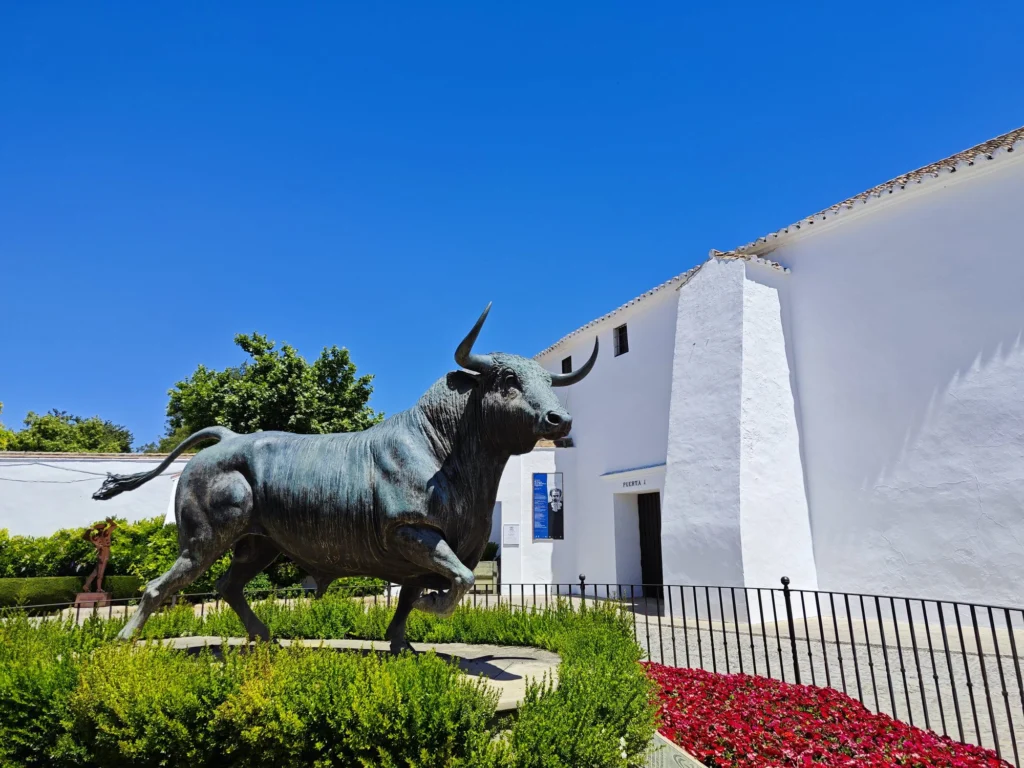
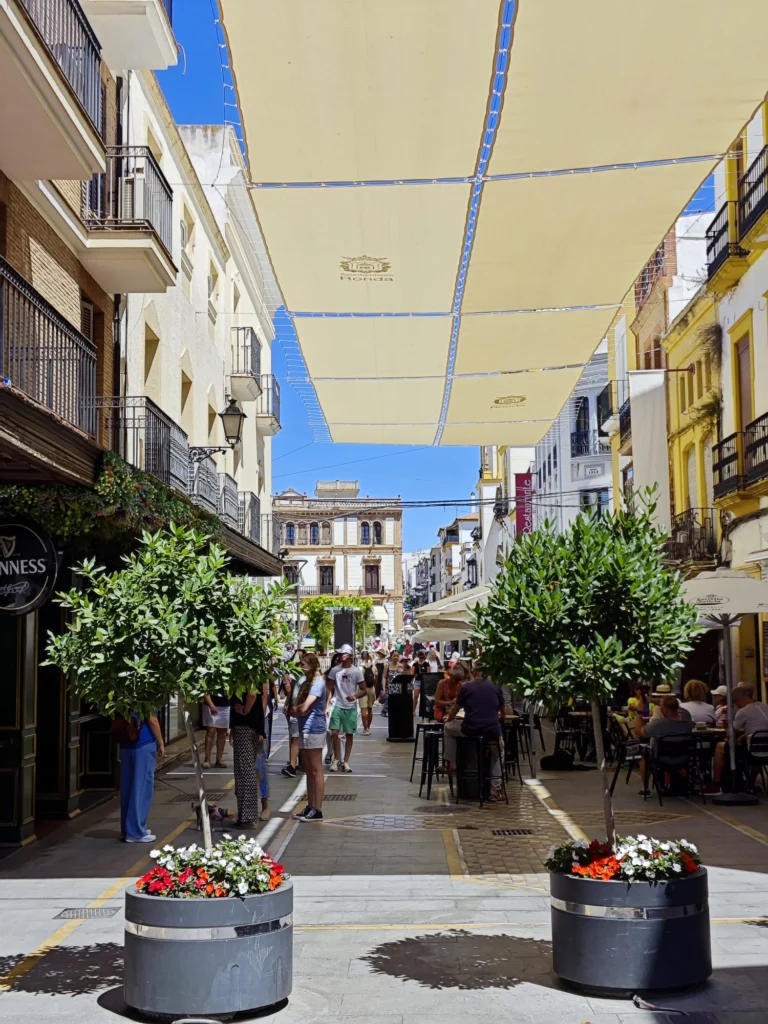
From the bullring you walk straight into Calle La Bola, the car-free shopping street under white sunshades. At the end is Plaza del Socorro with its church and terraces, a lovely spot for coffee or lunch. Try a glass of wine from the Serranía de Ronda: the mountain vineyards here produce better wines every year.

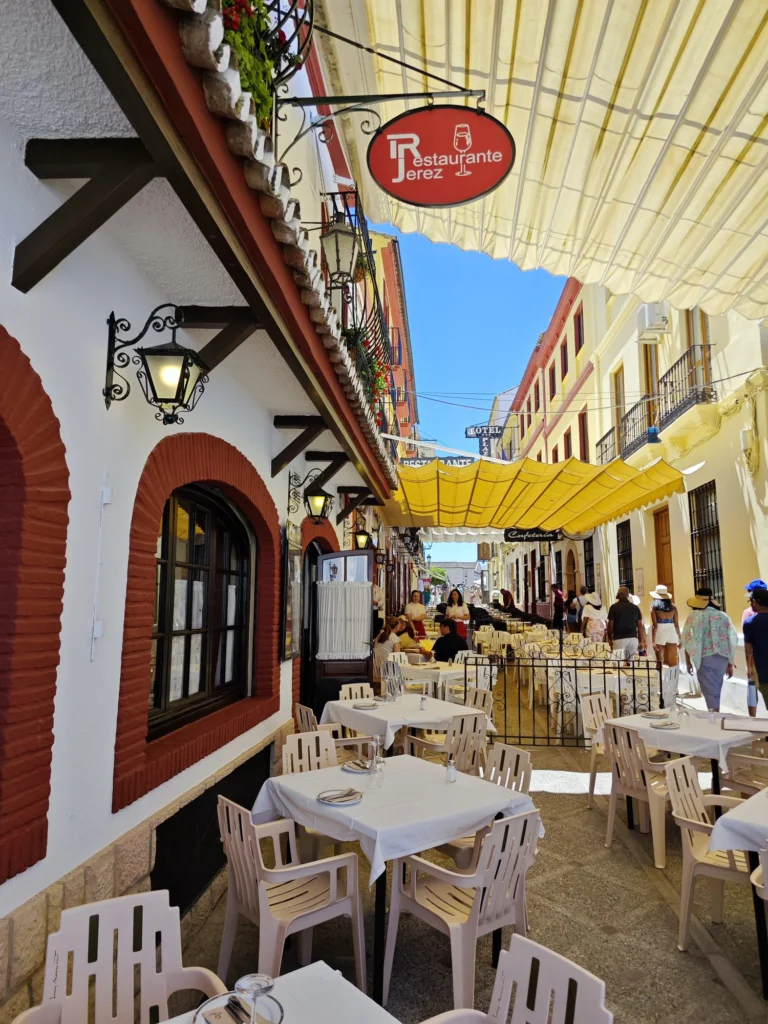
Our tip: Enjoy a delicious lunch with a sangria at Taberna El Almacén.
Nature around Ronda
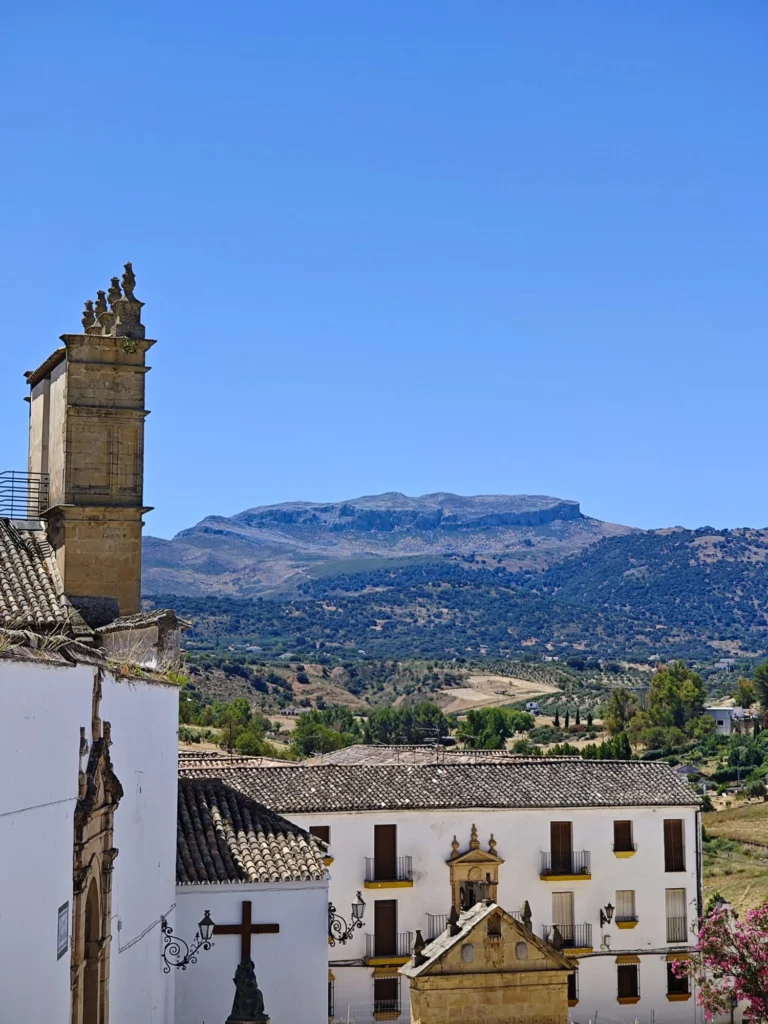
Ronda lies between two special natural areas. To the east is the Sierra de las Nieves, a national park since 2021 and a UNESCO Biosphere Reserve. To the west is the Sierra de Grazalema, also a UNESCO Biosphere Reserve. From the viewpoints along the gorge you can see these mountains on the horizon.
Setenil de las Bodegas: living under the rock
Twenty minutes further north lies Setenil de las Bodegas, and it is well worth adding to the day. It is one of the most unusual white villages in Andalusia: the houses were built not on top of the rocks but underneath them. In the street Cuevas de la Sombra you literally walk beneath an overhanging rock face, while sunny Cuevas del Sol has terraces serving tapas. Park on the edge of the village, as the streets are narrow and steep.
Practical tips
- Driving: from Estepona to Ronda takes just over an hour via San Pedro de Alcántara and the A-397. From Ronda to Setenil is about twenty minutes.
- Parking: there are underground car parks in the centre of Ronda, including one at Plaza del Socorro.
- When to go: spring and autumn are ideal. In summer it is hot in the middle of the day, so go early and bring water. Ronda lies at over 700 metres, so in winter it is noticeably cooler than on the coast: bring a jacket.
- Time: Ronda easily fills half a day and Setenil a couple of hours. Together they make a great full day out.
At the end of the day you drive back down to the coast, in time for the sunset on the terrace.